I’m almost willing to bet that if you were to ask (100) people to do an old man impression, there would be a few commonalities between all of them: Starting with posture; they would likely have a forward bend to their stand or walk. Speaking of walk, it would be slow and likely labored and they may even throw in a limp or gimp or some type of dragging of the foot. They’d probably have their hand on their back indicative of having lower back issues or stiffness. Is this how you visualize yourself in the coming years? If not, are you willing to do something about it? Do you feel it naturally to just accept that it’s coming or do all you can to provide a remedy and perhaps avoid it all together?
If you’re a man over 40, you’ve noticed the body doesn’t body like it used to: You know, that morning stiffness? The creak in your knees when you stand up or squat down? The way your back protests after a long day sitting at the desk or a weekend of trying to keep the yard pretty? It’s not a figment of your imagination: After this age, muscle elasticity hits the floor, joints revert and become tight, and recovery sometimes seems like it’s buffering on its way to completion; but here’s the good news: Stretching is one of the most powerful, underrated tools you have to fight back and in most cases requires nothing but you as a participant. It’s not just for yogis or physical therapists. It’s for YOU: The guy who wants to keep lifting, playing with his kids/grandkids and aging like a fine bourbon, not a rusty bolt. This isn’t about touching your toes (although that’s awesome if you can). This is about reclaiming mobility, reducing pain, boosting performance, and waking up ready to own the day. Let’s break down the top benefits of stretching for men over 40, backed by science and real-world results.
1. Stretching Reduces Chronic Pain and Stiffness
I don’t think a day goes by where something doesn’t hurt: If it isn’t my back then it’s my knees. If it’s not my knees then it’s my shoulder. I like most men over 40, deal with nagging aches on the regular. But why? Because as we age, fascia (the connective tissue around muscles) thickens and shortens. Sitting all day, repetitive lifting, or even old sports injuries tighten this tissue like Crocs left in the sun. Stretching lengthens muscle fibers, improves blood flow, and breaks up adhesions. The best way to think about it is sorta like giving your body an internal massage.
2. Stretching Improves Posture and Prevents Injury
You know that “dad hunch” I talked about earlier? The forward shoulders, rounded upper back, and tight chest from years of desk work, driving, and bench pressing more than equally focusing on your posterior (rear) chain? Yea, that’s not just aesthetics; it’s the main ingredient in your injury pie. Poor posture pulls your spine out of alignment, stresses your neck and lower back, and weakens your core. So what we have to do is target and stretch the chest, shoulders, and hip flexors to hit Ctrl + Z and revert those adverse changes. Stretching also increases joint range of motion (ROM), which directly reduces injury risk. This is the same ROM that helps build more muscle when lifting and understand that the core, the foundation of it all starts with being flexible enough to go through both the eccentric and concentric phase of a lift. Just to put things into context, a study in the British Journal of Sports Medicine found that men with limited hamstring flexibility were 2.5 times more likely to suffer a lower back injury. So the word of the day with this message is; stretch your hamstrings, and save your spine. Here are a couple things you can do at your desk every couple of hours and it literally takes 5-minutes to keep you semi-loose through the day:
- Doorway chest stretch (30 sec/side)
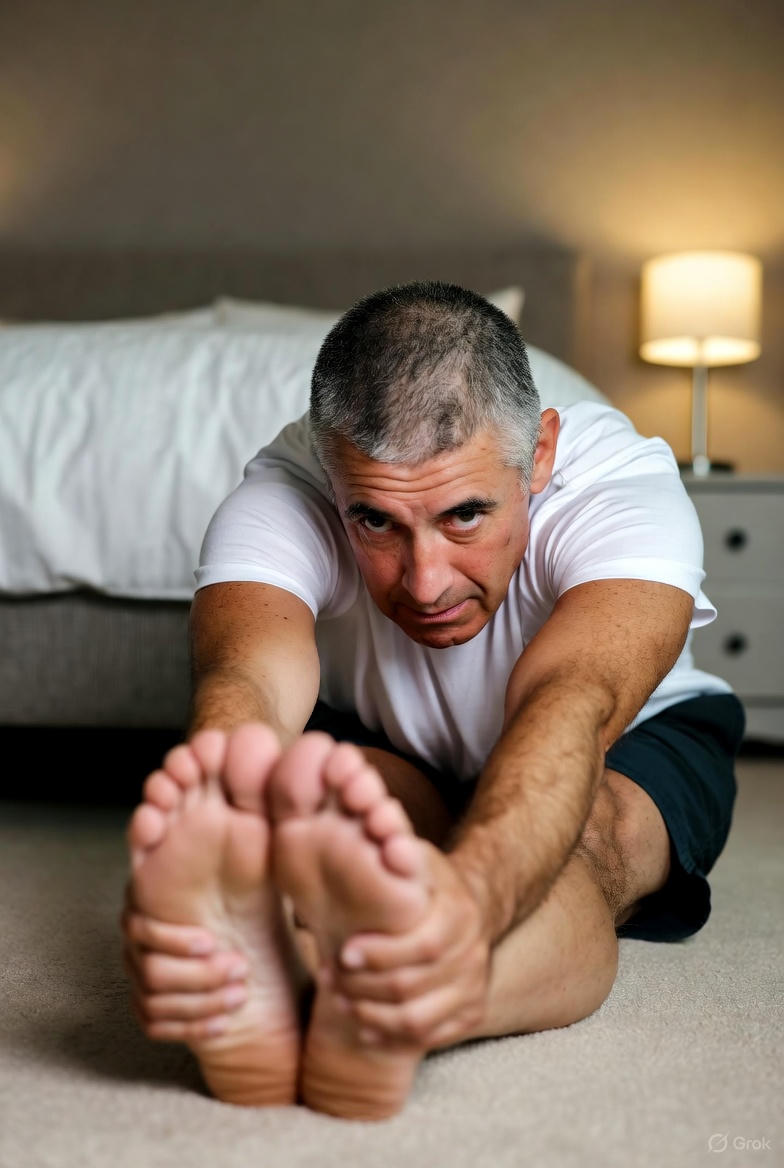
- Seated hamstring reach (30 sec)
- Neck tilt (20 sec/side)
3. Stretching Boosts Workout Performance and Recovery
This is that good ole “bang for the buck theory”: A lot of folks think stretching is just for warm-ups and cool-downs but let’s broaden that perspective a bit. Dynamic stretching before exercise improves power output, while static stretching afterwards speeds recovery. Dynamic stretching is quick and functional, meaning it’s done for a few seconds repetitively but not for an extended hold beyond about 5-seconds. The reason being is we’re trying to send a signal to the central nervous system to let it know to “get ready” and fire up. Remember the last time you saw a 100-meter runner before they got down on the starting blocks: Their moves and stretching were fast-paced and in some cases super explosive. Static stretching on the other hand is what you would envision with yoga or Pilates where the holds are extensive and accompanied by deep breaths to send signals, again to the CNS, that it’s safe to be loose and there’s no more trauma or risk to come. All my gym bros know about this; static stretching reduces DOMS (delayed onset muscle soreness) and has been proven to cut post-workout soreness by about 30% the following day. The aim is to hold each stretch for 1-2 minutes in those areas that tend to get a bit tight, like the hips, chest and lats. The payoff is faster recovery, heavier subsequent lifts and less of a grind getting out of bed.
4. Stretching Enhances Sleep Quality and Reduces Stress
Yes, you read that right, stretching helps you sleep better and is game-changing for us that struggle with insomnia or restless nights. Pre-bedtime stretching lowers cortisol levels and helps you fall asleep faster (latency) by way of activating the parasympathetic nervous system, also known as the rest and digest system.
Here’s a quick 5-minute bedtime stretch sequence:
- Child’s pose (60 sec)
- Cat-cow (5 breaths)
- Seated forward fold (60 sec)
- Supine twist (30 sec/side)
- Legs up the wall (2 min)
Going back to the 3,2,1 Method in Sleep: Are You Getting Enough? – Part 2; make sure you execute this in dim light and no phones allowed so that you fall asleep faster and wake up rejuvenated, not groggy.
5. Stretching Supports Long-Term Mobility and Independence
This is the big one to be stressed: Stretching keeps you moving for life. After 40, sarcopenia (age-related muscle loss) begins. Combine that with tight joints, and you’re on a fast track to some seriously limited mobility. All it takes is (3) days a week of stretching to maintain better balance, walking gait speed, and functional independence over non-stretchers.
Keep this in mind:
- Can you tie your shoes without grunting?
- Get up from the floor without using your hands?
- Play catch with your kids/grandkids without pain?
Stretching isn’t vanity or something to wow others with; it’s insurance for your future self.
How to Start: The 10-Minute Daily Stretching Routine for Men Over 40
You don’t need an hour nor a special studio. 10 minutes a day is enough to see results in 2–4 weeks. Here’s a simple routine that requires zero equipment:
| Time | Stretch | Hold | Target |
|---|---|---|---|
| 0:00–1:30 | Standing Quad Stretch | 45 sec/leg | Front of thigh |
| 1:30–3:00 | Doorway Chest Opener | 45 sec/side | Chest and Shoulders |
| 3:00–4:30 | Seated Hamstring Reach | 60 sec | Back of legs |
| 4:30–6:00 | Figure-4 Hip Stretch | 45 sec/side | Glutes and hips |
| 6:00–7:30 | Cat-Cow Flow | 5 breaths | Spine mobility |
| 7:30–9:00 | Neck Half-Circles | 30 sec/direction | Neck, traps |
| 9:00–10:00 | Deep Belly Breathing | 60 sec | Relaxation |
Start today, not Monday and do so daily. Use the morning to wake up and carry on through the day feeling more loose or the nighttime to wind down. Use a timer and please stay consistent!
Stretching isn’t just physical. It’s you deliberately hitting the pause button on your busy life. For 10-minutes, you’re not a dad, boss, or husband; you’re just you, breathing, moving and reconnecting with your body. That mindfulness reduces stress, sharpens focus, and builds resilience. At the end of the day, I want you to be able to move better, perform stronger, hurt less, sleep deeper and age low and slow!


Comments
One response
What do you do to keep yourself flexible?