Once you hit your 40s, life simply gets louder. Work responsibilities stack up. Family needs more of your attention. Sleep becomes negotiable. Stress sneaks in quietly. And somewhere in the middle of all that, your health can start running on autopilot.
Not because you don’t care—but because you’re busy.
That’s where wearable tech and fitness tracking step in—not as another “thing” to manage, but as a simple, honest mirror. Because here’s the truth most of us learn the hard way:
You can’t manage what you don’t measure.
And for men over 40, measurement isn’t about obsession—it’s about awareness.
Why Measurement Matters More After 40
20 – 30 years ago you could “wing it.” Miss sleep, eat poorly for a few days, skip workouts—and your body bounced back.
After 40? Nu uh.
Now, small habits compound:
- Poor sleep = higher blood pressure
- Sedentary days = weight gain
- Chronic stress = hormone disruption
- Missed recovery = injury risk
The problem is, most of these changes happen quietly. You don’t feel them until they’ve been happening for years.
That’s exactly why tracking matters.
Wearable tech doesn’t judge. It doesn’t lecture. It just shows you what’s actually happening.
What Wearable Tech Really Does (And Why It Works)
Wearable fitness devices—like smartwatches, fitness bands, and health rings—track things your body already knows but doesn’t tell you clearly.
They measure:
- Steps and daily movement
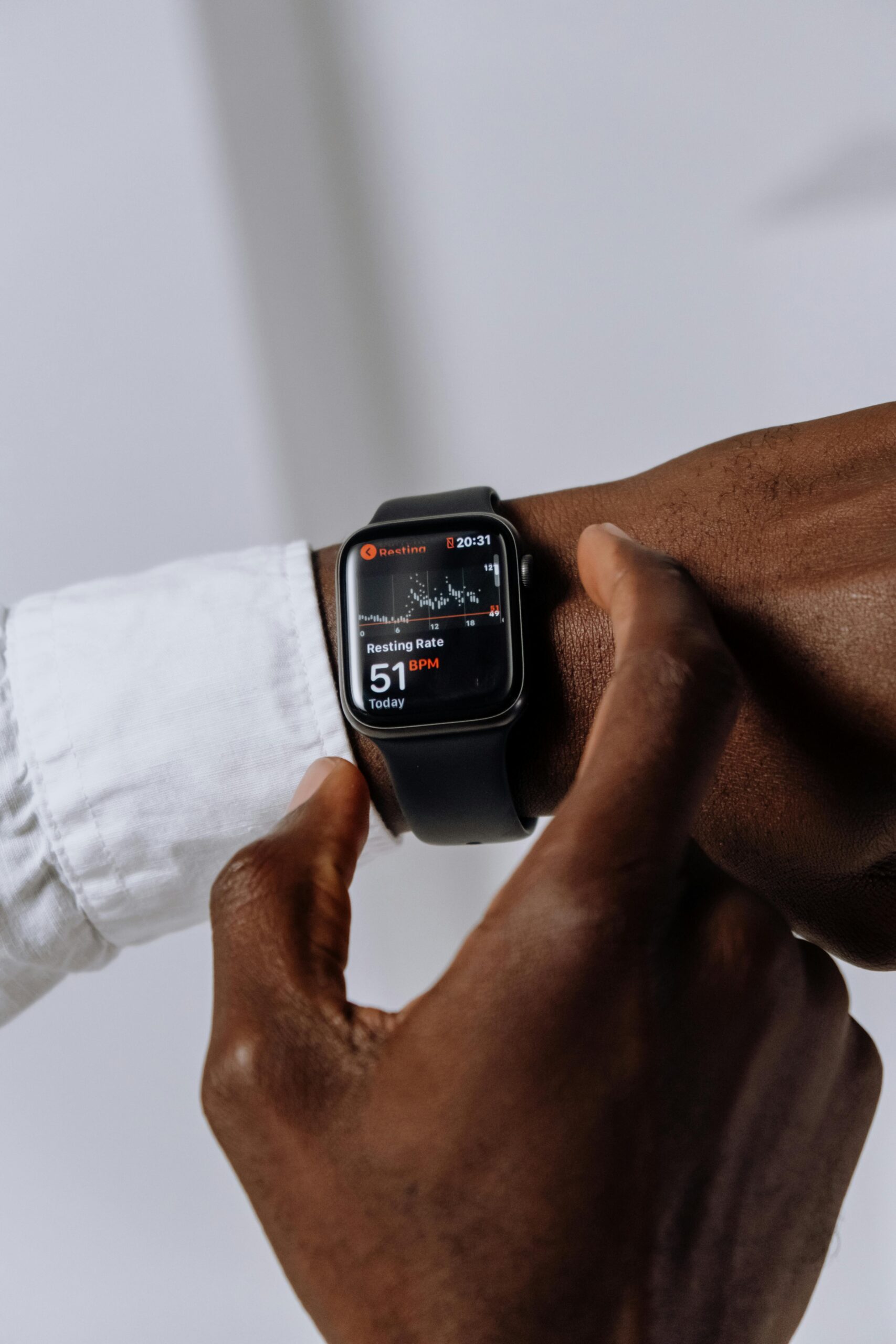
- Heart rate and resting heart rate
- Sleep duration and quality
- Recovery and readiness
- Stress levels
- Calories burned
- Workout intensity
- Heart rate variability (HRV)
This isn’t about becoming a data nerd. It’s about connecting cause and effect.
Example:
You sleep 5 hours → resting heart rate goes up → energy crashes → workout suffers → stress increases.
Now you know why.
Movement: Steps Don’t Lie
You want to know one of the biggest wake-up calls for men over 40?
Daily steps.
Most guys think they’re active… until the tracker shows 3,200 steps by 6 PM.
Wearables expose:
- How much you really move
- How long you sit
- Whether your workouts offset inactivity (hint: they usually don’t)
The simple act of seeing your step count often leads to:
- More walking
- More breaks from sitting
- More intentional movement
And walking—especially for men over 40—is one of the best health habits on Earth.
Heart Health: The Quiet Data That Saves Lives
Heart disease doesn’t announce itself. It whispers.
Wearables help men over 40 monitor:
- Resting heart rate
- Heart rate trends over time
- Recovery heart rate after workouts
- Irregular rhythm alerts (in some devices)
A consistently rising resting heart rate can signal:
- Overtraining
- Poor sleep
- Illness
- Excess stress
- Weight gain
That’s powerful information to bring to your doctor—or to adjust your habits before problems start.
Sleep Tracking: The Game Changer Most Men Ignore
If there’s one area wearable tech truly shines, it’s sleep.
Most men over 40 think they sleep “okay.”
The data often says otherwise.
Sleep trackers reveal:
- Actual sleep time vs time in bed
- Sleep consistency
- Nighttime awakenings
- Sleep debt over time
When you see that you’re averaging 5.5 hours, it explains:
- Low energy
- Weight gain
- Poor workouts
- Brain fog
- Irritability
You can’t fix what you don’t see.
Once sleep becomes visible, men start protecting it.
Recovery & Stress: Listening Before the Breakdown
Modern wearables track stress and recovery using metrics like:
- Heart rate variability (HRV)
- Resting heart rate
- Sleep quality
- Training load
This matters because men over 40 don’t recover like they used to.
The data helps answer questions like:
- Should I train hard today or take it easy?
- Am I stacking stress from work and workouts?
- Why do I feel run down even when I “exercise”?
Instead of pushing through blindly, you learn to train smarter, not harder.
Accountability Without Guilt
Here’s the beauty of wearables:
They don’t shame you.
They simply report.
Missed steps? You see it.
Poor sleep? It’s right there.
Great week? You get confirmation.
This creates self-accountability, which is far more powerful than motivation.
Motivation fades.
Data stays honest.
Wearables Help With Consistency, Not Perfection
Men over 40 don’t need extreme plans.
They need consistency.
Wearables reinforce:
- Daily habits
- Weekly trends
- Long-term progress
They shift the mindset from:
“Did I crush it today?”
to
“Am I trending in the right direction?”
That shift alone reduces burnout and injury.
How to Use Wearable Tech Without Obsessing
Remember, data is a tool, not a dictator.
Use wearables to:
- Spot patterns
- Adjust habits
- Stay aware
Don’t:
- Chase perfection
- Panic over bad days
- Compete with unrealistic standards
Look at weekly and monthly trends, not daily fluctuations.
The Real Power: Awareness Leads to Ownership
When men start tracking, something important happens.
They stop guessing.
They stop relying on feelings alone.
They stop ignoring warning signs.
They start making informed decisions.
That’s what “you can’t manage what you don’t measure” really means.
Measurement creates:
- Awareness
- Awareness creates ownership
- Ownership creates change
Final Thought: This Is About Longevity, Not Gadgets
Wearable tech isn’t about becoming younger.
It’s about staying capable.
Capable of:
- Working hard
- Playing with your kids or grandkids
- Sleeping well
- Training safely
- Managing stress
- Being present
Your health deserves the same tracking you give your finances, schedule, or business goals.
Because at this stage of life, ignoring the numbers doesn’t make them disappear—it just delays the consequences.
Start measuring.
Start managing.
Start showing up for the long haul.
Your future self will thank you.
Affiliate Link (Below)
The Apple iWatch has been my go-to for all of my fitness parameters. This includes workout calories burned, steps, and intensity. On the other hand, my Oura Ring has been the king of monitoring my sleep, rest, and recovery. It also reminds me to get up and move around when I’ve been sitting too long. Oftentimes people ask me “which is better.” Honestly, I have and use both. I understand they are both good, but for separate purposes. If you don’t have an Oura Ring, get one here. It’s like you own at-home sleep study.

