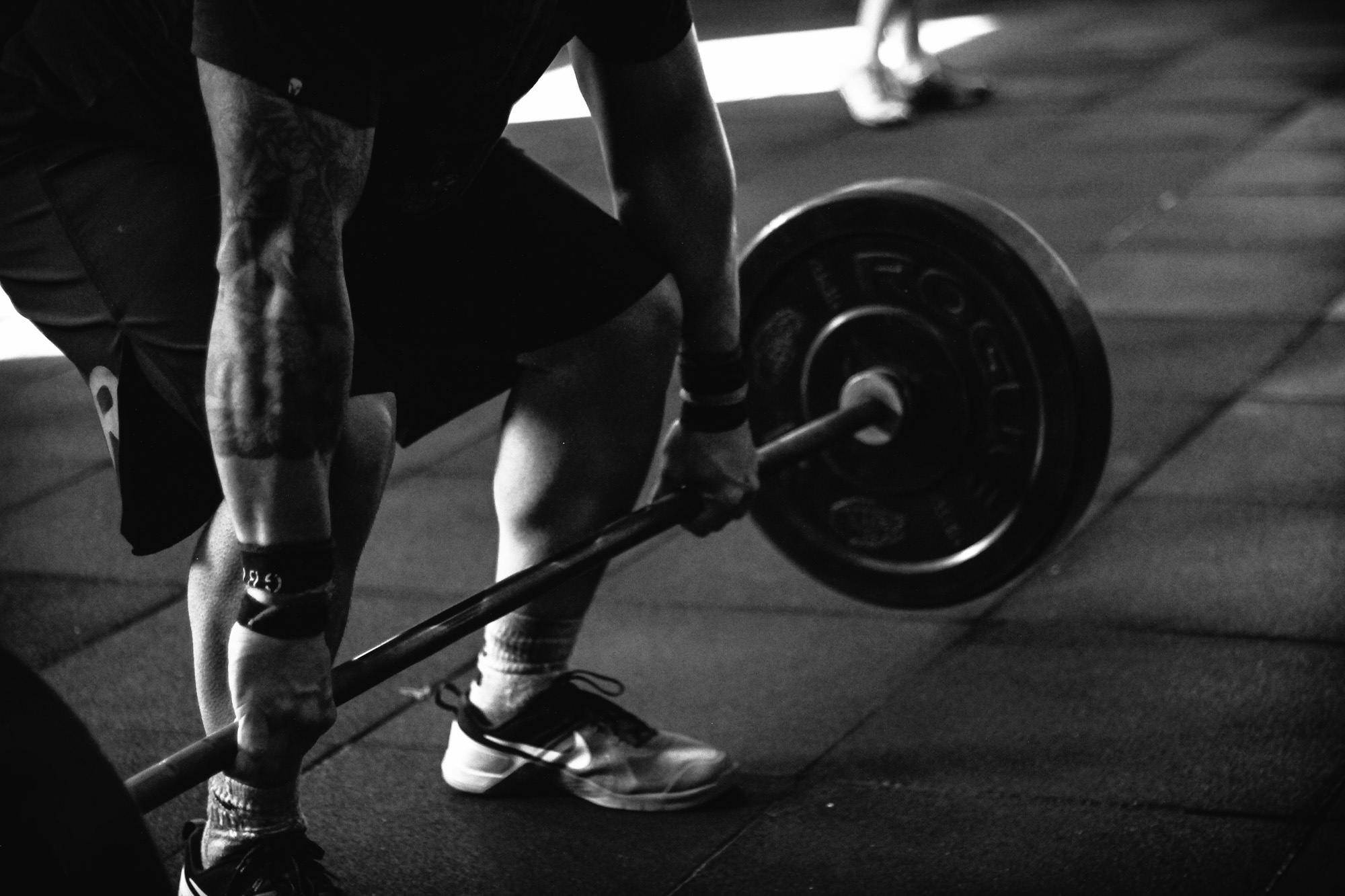
For decades, the bodybuilding culture has popularized “split days”, consisting of a chest day, leg day, back day, arms day, etc. The idea is to focus (intensely) on one muscle group per session which allows for a lot of volume combined with adequate recovery for each body part. That approach works well for young whippersnappers who can commit 4–6 days in the gym per week, but for men over 40, that reality often changes: Life gets busier, recovery slows, minor aches and pains accumulate, and skipping a workout becomes more likely. This is precisely why full-body training can offer a more practical, effective, and sustainable path. At this stage of the game, what we’re aiming for more than any is to be consistent.
Split vs Full-Body Are More Similar Than You Think
One of the strongest arguments for switching to full-body training rests in what the research shows when volume is the same: The differences in strength and hypertrophy between split routines and full-body routines tend to be non-existent:
- A randomized trial comparing an upper/lower split versus full-body training over 12 weeks found no significant advantage of split over full-body when total weekly volume was equated for each muscle group. (BioMed Central). In other words, as long as the same amount of sets and reps are completed in that week, the stimulus and growth were the same and I will argue it’s even better with full-body training due to being able to practice moves more often. There have even been systematic reviews and additional research that signifies that full-body training can lead to greater fat loss simultaneous with strength gains. So in short; if you train each muscle group with sufficient volume during the week, full-body sessions often yield the same physiological results as specialized splits but with greater flexibility and fewer things that can go wrong. Which takes us into:
The Problems with Split Routines Past 40
- Missed Days Compound Quickly
As an example; if you miss your “leg day,” that body part might go untrained for more than a week. Over time, occasional skipping becomes a chronic neglect and none of us want to look like a top-heavy mushroom. We’ve all made fun of the guy with a big upper body and teeny tiny legs. With full-body training, any session you hit trains all major groups, reducing gaps in the muscle building signal. - Recovery Slows with Age
As testosterone, growth hormone, and recovery speed declines, the body is less forgiving of high-volume in individual sessions. Your shoulders, lower back, knees and/or connective tissues might get overused or inflamed more easily. Full-body training spreads the load more evenly across the body per session, reducing stress on any single area. - Time & Life Constraints
Between work, family, travel, and other “life” obligations, being able to dedicate 5-6 gym days per week becomes unrealistic, plain and simple. When you’re limited to just 2–3 sessions per week, split routines force you to sacrifice either volume per muscle or consistency. Full-body becomes more efficient in that you hit everything in fewer trips to the gym. - Motivation & Momentum
Missing one or two sessions in a split plan can kill your momentum and make you feel like you’ve “fallen behind”. With full-body training, every workout still “counts,” so slipping a little doesn’t derail the entire plan and put you in a mental funk. - Risk of Imbalances
If your split isn’t well planned, overemphasis on certain muscles, like the chest or arms can lead to imbalances. Full-body forces balance across push, pull, legs, and core each session.
Why Full-Body Is The Smarter Move After 40
- Increased Training Frequency per Muscle
By working muscles multiple times per week (rather than once), you reinforce stimulus more often and help maintain more of a “minimum effective dose” for muscle retention. You’re keeping the muscle reminded that it needs to constantly grow and adapt to the repetitive load being placed on it. - Better Metabolic & Hormonal Environment
Full-body training raises systemic stress (more muscle involvement), which can improve hormonal responses, insulin sensitivity, and fat oxidation because nothing stays dormant for too long. You either use it or lose it Jack! - Greater Flexibility
If you have to miss a session, you lose less. Every workout is “full,” so the structure remains intact. This allows you to rearrange days if needed and not get behind. This is especially true for those that workout either late afternoon or early evening in that you never know how the day may shape out and something else becomes the priority. - Simplicity in Programming
You only need one plan to hit everything. This means less logistics, fewer moving parts and less chance for confusion. - Reduced Overuse Risk
Because intensity and volume for each muscle per session can be moderated, joint stress and localized fatigue are often easier to manage.
Ok, I See. So How Do I Execute?
I’m going to try to make this as easy as possible so that you can give it a try and let us know what you think (be sure to come back and comment). Remember, this is programmed for a MAXIMUM of (4) days per week and I personally only perform this (3) days a week:
- Frequency: 2–4 full-body sessions per week (pay attention to your recovery). Days should not be back-to-back with at least (1) day or rest in between.
- Volume: Aim for 9–12 sets per muscle per week, evenly spread across sessions. You’ll want to do 3–4 sets per muscle per workout (e.g. 3 full-body workouts × 3 sets per muscle = 9 sets weekly).
- Exercise Selection: Favor compound movements and choose an exercise for each body part (quads, hamstrings, calves, chest, back, shoulders, traps, biceps, triceps and abs). As a bonus, you can add in forearms and glutes. Only if necessary should you substitute isolation exercises as needed. Because you’re looking to hit at least (10) body parts, time is of the essence.
- Intensity: Keep sets in a challenging rep range of 6–12 reps, or even 8–15 for older lifters. You are not trying to go for failure on each lift, thus leave 1–2 reps in reserve and keep your rest periods around the 60-second mark.
- Progressive Overload: Gradually increase weight and reps as the weeks pass. For most lifts, I’m increasing 2.5 to 10lbs per week with almost no plateaus.
- Recovery Strategy: Use the days in between to perform cardio or some type of sport to aid in your recovery. My go to activities are walking, stair mill, rowing, elliptical, recumbent bike, jump rope, box jumps and basketball. Also, checkout the blog post Sauna: Some Like It Hot to also speed up recovery.
Common Objections
- “But I want to specialize weak areas or “lagging parts””
You can still address them with a full-body workout. Add a couple extra sets after your main compound lifts. In other words, get through all (10) body parts and then add them to the end of the session. - “Will full-body be too tiring or overwork my joints?”
You control that by way of volume. Use moderate sets per muscle per workout, allow rest days, monitor your soreness, and scale back as needed. - “I used to gain more on splits”
Often that’s because you were younger, not as susceptible to overtraining and able to handle more volume. What worked then may not compliment your present physiology and recovery capacity.
Final Thoughts
In closing; for men over 40 who face more constraints on recovery, time, and consistency, full-body training is a smarter choice. The science shows that when volume is equal, you won’t sacrifice strength or growth. Meanwhile, your program becomes simpler, more forgiving, and more sustainable. Go ahead and swap that rigid body-part split plan (and that cloud of guilt when you miss a “leg day”) for a full-body workout that supports your schedule, joint health, and long-term consistency. Even one well-executed full-body session in a week is better than letting a muscle group go untrained for weeks!
Affiliate Link (Below)
Now, just because you’re getting old, doesn’t mean you’re to start lifting light and not challenge those muscles to grow. At the same time, I don’t want you hurt and having to sit out for days or weeks as you recovery from a back injury. If you don’t have a heavy-duty weightlifting belt that gives your core more security than a celebrity walking through a mall, go ahead and get you one here


Comments
One response
[…] health directly impacts erectile quality. Regular walking, strength training, and high-intensity interval (HIIT) exercise all improve circulation and boost testosterone — the […]